

DIY Electrical Mistakes We See Most in Michigan Homes

Every week we get calls from homeowners in Shelby Township, Rochester Hills, and Bloomfield who started a small DIY electrical project that turned into something bigger than they planned. The projects themselves aren't usually the problem — replacing a fixture or adding an outlet is reasonable homeowner work. What gets people into trouble is a handful of repeat mistakes that show up on almost every DIY-gone-wrong call we take.
Mistake 1: Matching Wire Gauge to the Wrong Breaker
Wire gauge and breaker size are a matched pair, not independent choices. 14-gauge wire is rated for a 15-amp circuit; 12-gauge for 20 amps. Put 14-gauge wire on a 20-amp breaker and the breaker lets the wire carry more current than it's rated for before it trips — the wire, not the breaker, becomes the weak link. This is one of the most common findings during home inspections, usually from a DIY circuit extension where someone matched the wire to what was easiest to run rather than what the breaker required.
Mistake 2: Skipping GFCI/AFCI Protection
Ground-fault protection is required in kitchens, bathrooms, garages, and outdoor outlets because those are the locations where a person is most likely to become the path to ground — standing on a wet floor, touching a metal sink, holding a tool outside in the rain. Arc-fault protection is required in most living spaces because it catches the kind of intermittent arcing that starts fires inside walls, long before a standard breaker would ever trip. Skipping either isn't a shortcut — it's removing the specific protection built for exactly the situation you're wiring for.
Mistake 3: Extension Cords as Permanent Wiring
An extension cord run to a spot without an outlet is meant to be temporary. When it becomes the permanent way a room gets power — behind a couch, under a desk, feeding a space heater every winter — it's carrying a sustained load it was never built for, hidden from view where a fraying cord or a hot connection won't get noticed until something's already wrong.
Mistake 4: Working a Panel Live
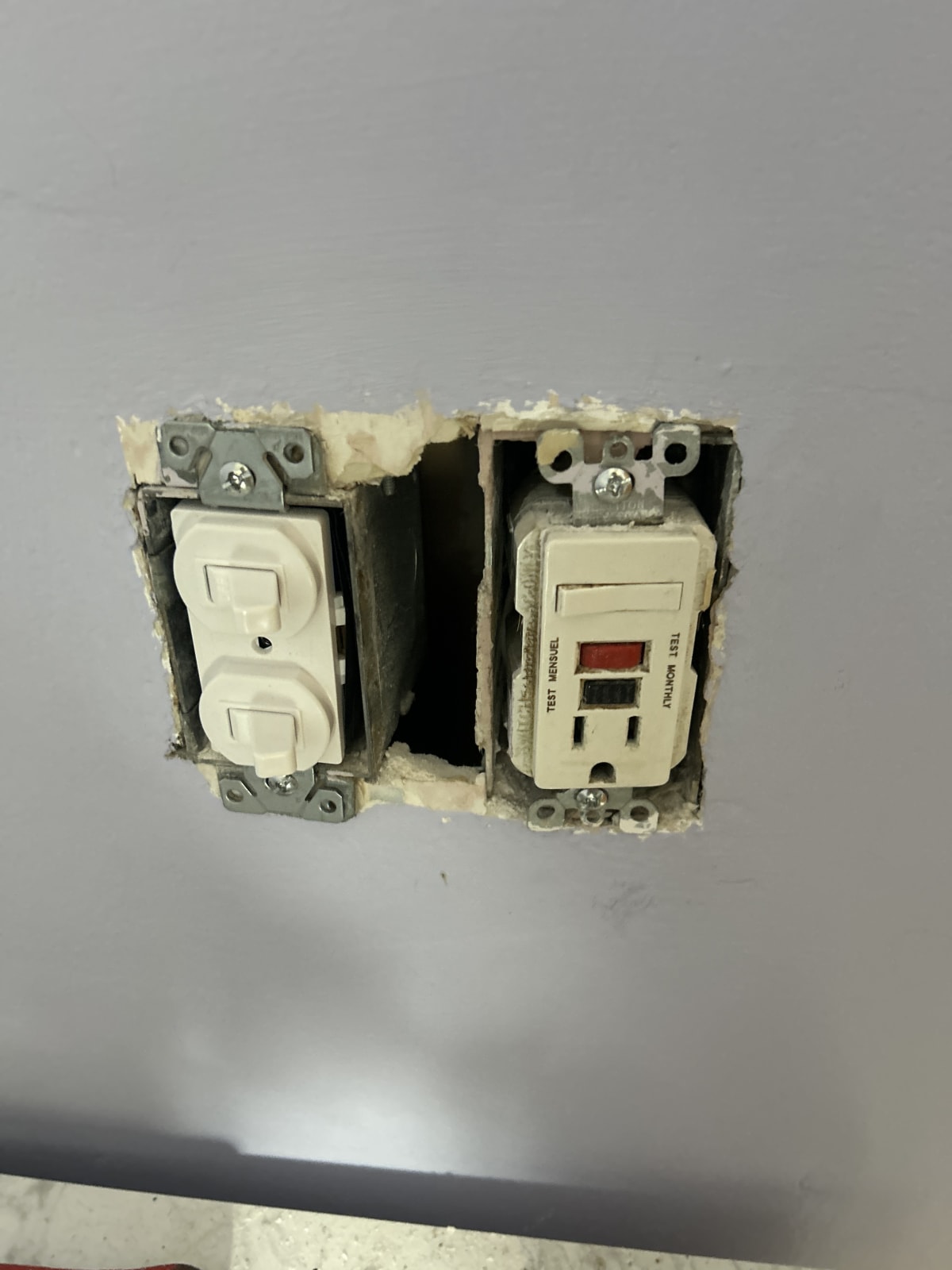
This is the mistake that sends people to the emergency room, not just to a callback. The main breaker cuts power to everything below it — except the main lugs themselves, which stay energized as long as the meter is connected. Anyone who's told you to "just be careful and not touch the sides" doesn't understand how the panel is built. This is the one job on this list with zero acceptable DIY version.
Mistake 5: Skipping the Permit
A permit isn't paperwork for its own sake — it's what gets a second, qualified set of eyes on the work before the walls close up. Skipping it doesn't just carry legal risk; it means nobody ever confirmed the work met code, which becomes a real problem the moment you sell the house or file an insurance claim involving that circuit.
Where the Line Actually Is
Not everything electrical needs a licensed electrician. Swapping a light fixture on an existing box with the breaker off, or replacing a switch or outlet cover, are reasonable homeowner tasks. The line moves the moment a project needs a new circuit, a new box, work inside the panel, or touches aluminum branch wiring from a 1960s-70s build — that's where Michigan code requires a licensed electrician, and where a mistake stops being an inconvenience and starts being a hazard.
FAQ
Can I add an outlet to an existing circuit myself?
Extending a circuit is more involved than swapping a fixture — it requires confirming the circuit has capacity left, using the right wire gauge, and, in most Michigan municipalities, a permit. It's a common DIY overreach.
What's the real risk of the wrong wire gauge, beyond a tripped breaker?
The breaker protects the wire, not the other way around. Undersized wire on an oversized breaker can overheat well before the breaker ever trips.
Not sure which side of the DIY line your project falls on? Call 586-489-1504 before you start, not after.
More electrical advice for homeowners
Explore more homeowner-friendly electrical tips, safety advice, and upgrade ideas from our team.


Electrical Services For Your Home
Use our simple booking tool to schedule electrical service or get a rough estimate for common projects. Choose a time that works for you and we'll take care of the rest.